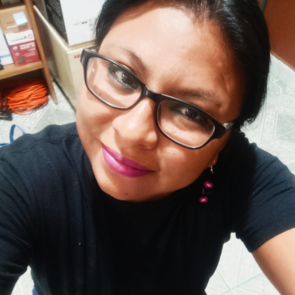
Poulette Celene Hernández
Poulette Celene Hernández (25 January 1888) is a woman human rights defender, lawyer and communications specialist from the coast of Chiapas. Since 2013, she has been working at the Digna Ochoa Human Rights Centre, based in the city of Tonalá, where she has been involved in the defence, promotion and enforcement of human rights in communities in the region.
Throughout her career, she has provided support to women victims of gender-based violence, contributing to access to justice, collaborative women movements strengthening and visibility of violence faced by women in community and rural contexts.
She is the founder of the Red de Mujeres de la Costa en Rebeldía (Network of Women of the Coast in Rebellion), a space for women defenders to come together and promote training and collective action processes to defend women's rights and build more just, violence-free territories.
Her work has focused on comprehensive support for women, the defence of human rights and the strengthening of community capacities. Currently, her interests lie on digital security with a gender and human rights perspective, and promoting tools and strategies for the protection of women defenders, organisations and communities against digital risks and contexts of violence.
Due to her human rights work, she has been subjected to various attacks. On 7 and 8 February 2026, she received threats and suffered physical assaults in her home in Tonalá, Chiapas, Mexico, in an attempt to intimidate her because of her work. Nevertheless, Poulette has continued her advocacy and has demanded justice from the authorities, calling for a thorough investigation into the attacks against her and for those responsible to be sanctioned, with the application of a gender perspective and a specific focus on human rights defenders, stressing the need to combat impunity, especially when the violence is directed at women defenders. In response to these demands, her aggressors brought a case against her, accusing her of causing injuries which led the Istmo‑Costa branch of the Chiapas Prosecutor’s Office to open an investigation and summon her to testify on the basis of allegations made by her own aggressors.
This situation illustrates the high‑risk context in which she carries out her work, where the very institution that should ensure a diligent investigation into the violence she suffered is, at the same time, subjecting her to criminal proceedings, creating a pattern of criminalisation that heightens the risks to her life, integrity and security.

